The DroneHub
A Multi-Environment Testbed for Sustainability Robotics
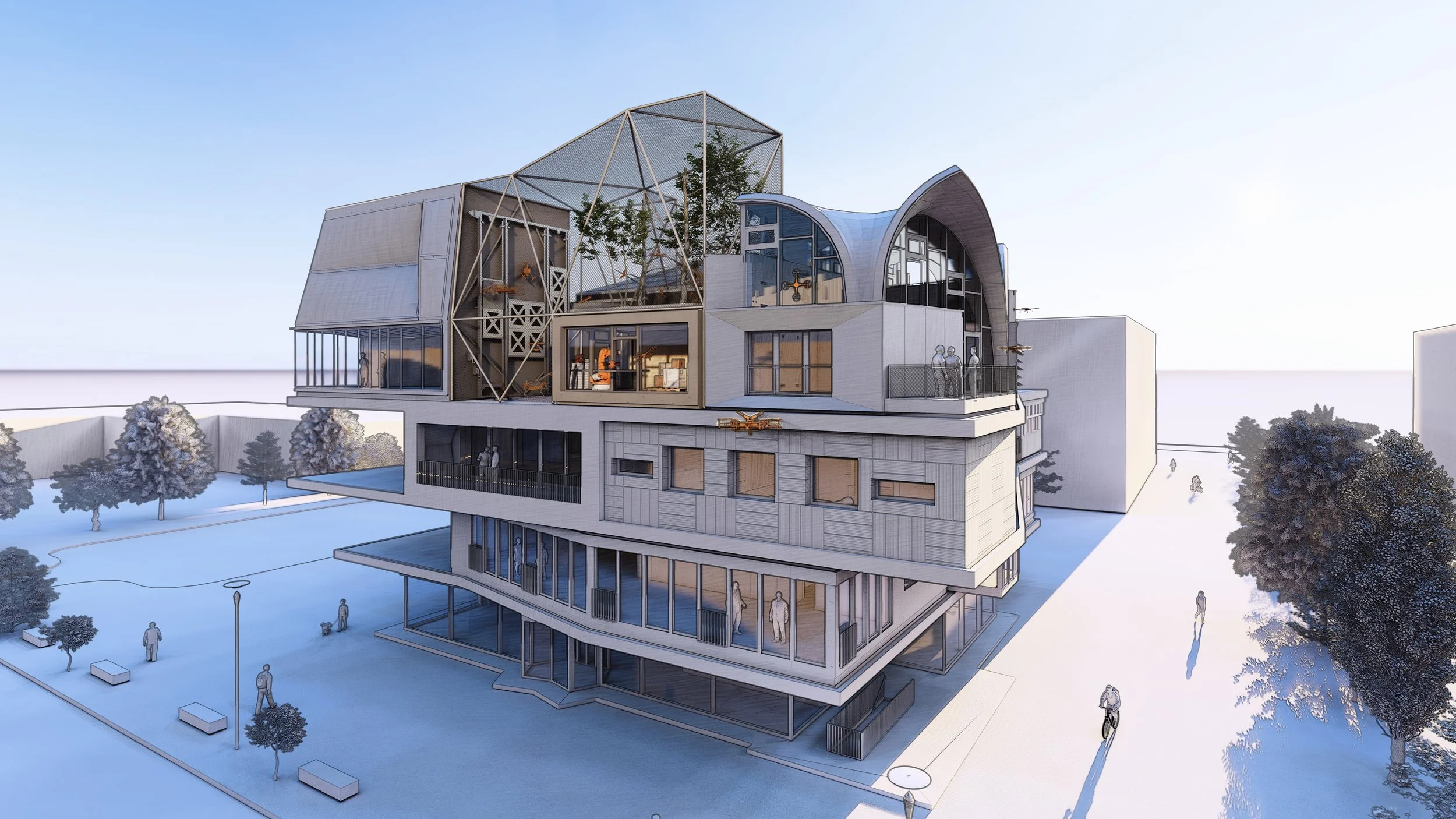
The DroneHub is a very unique outdoor, multi-environment research infrastructure that replicates diverse terrains, structural elements, and ecological contexts. It enables the investigation of numerous critical questions at the heart of sustainability robotics. Discover more below.
Representative Environments
-
Construction Robotics Zone
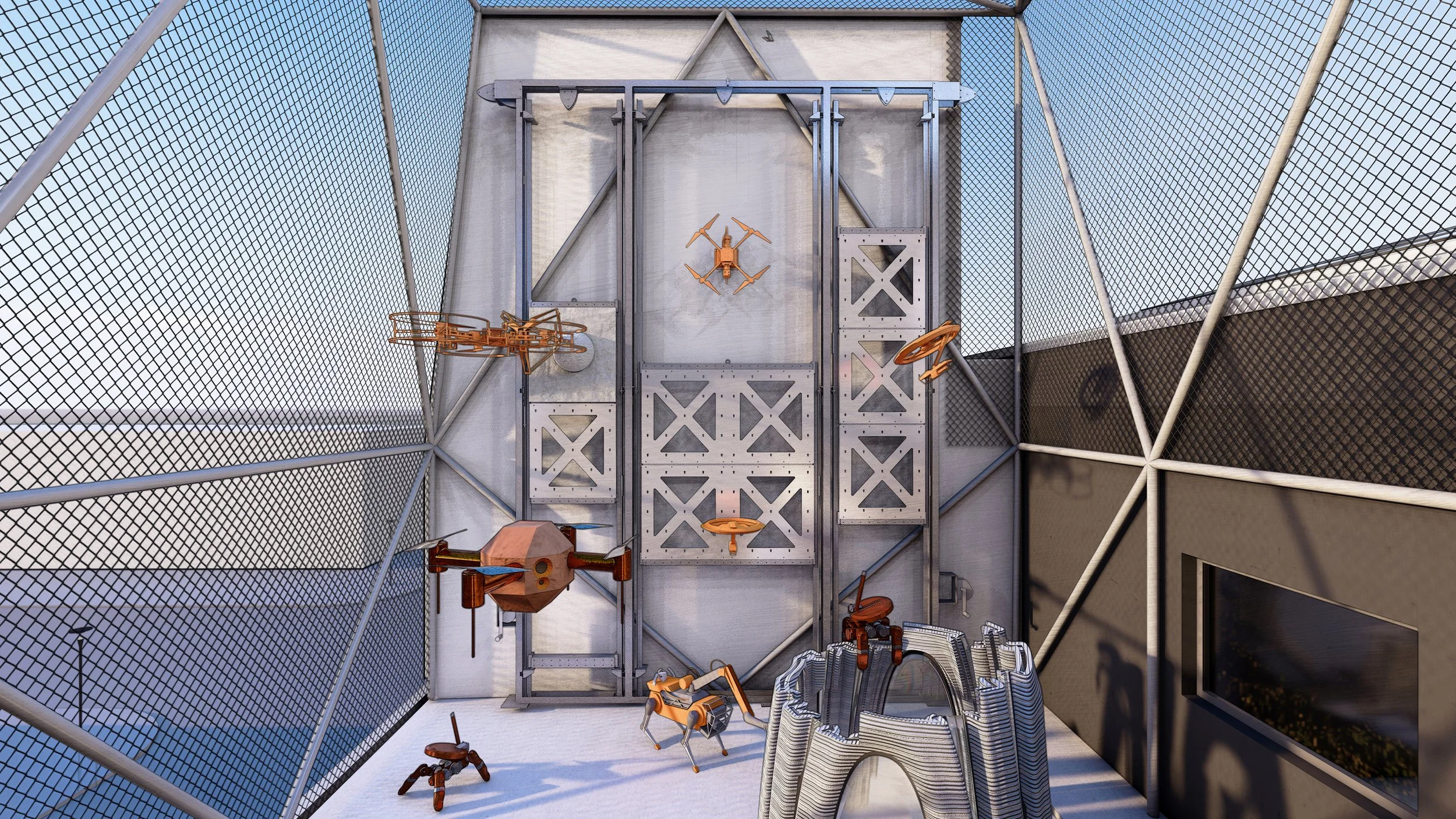
Aerial robots are already well established in the modern construction industry, particularly for tasks such as monitoring, surveillance, and data collection. However, with recent advancements enabling their deployment in high-precision interactive manufacturing and maintenance, they can contribute even more to sustainable urban development. These systems can detect structural damage, map environments, apply paint to extend the lifespan of existing infrastructure, and even fabricate new structures using additive methods. The “Construction Robotics Zone” facilitates pioneering research aimed at expanding these capabilities through its distinctive feature, the “Aerial AM Wall.”
-
Robotics Biosphere Zone
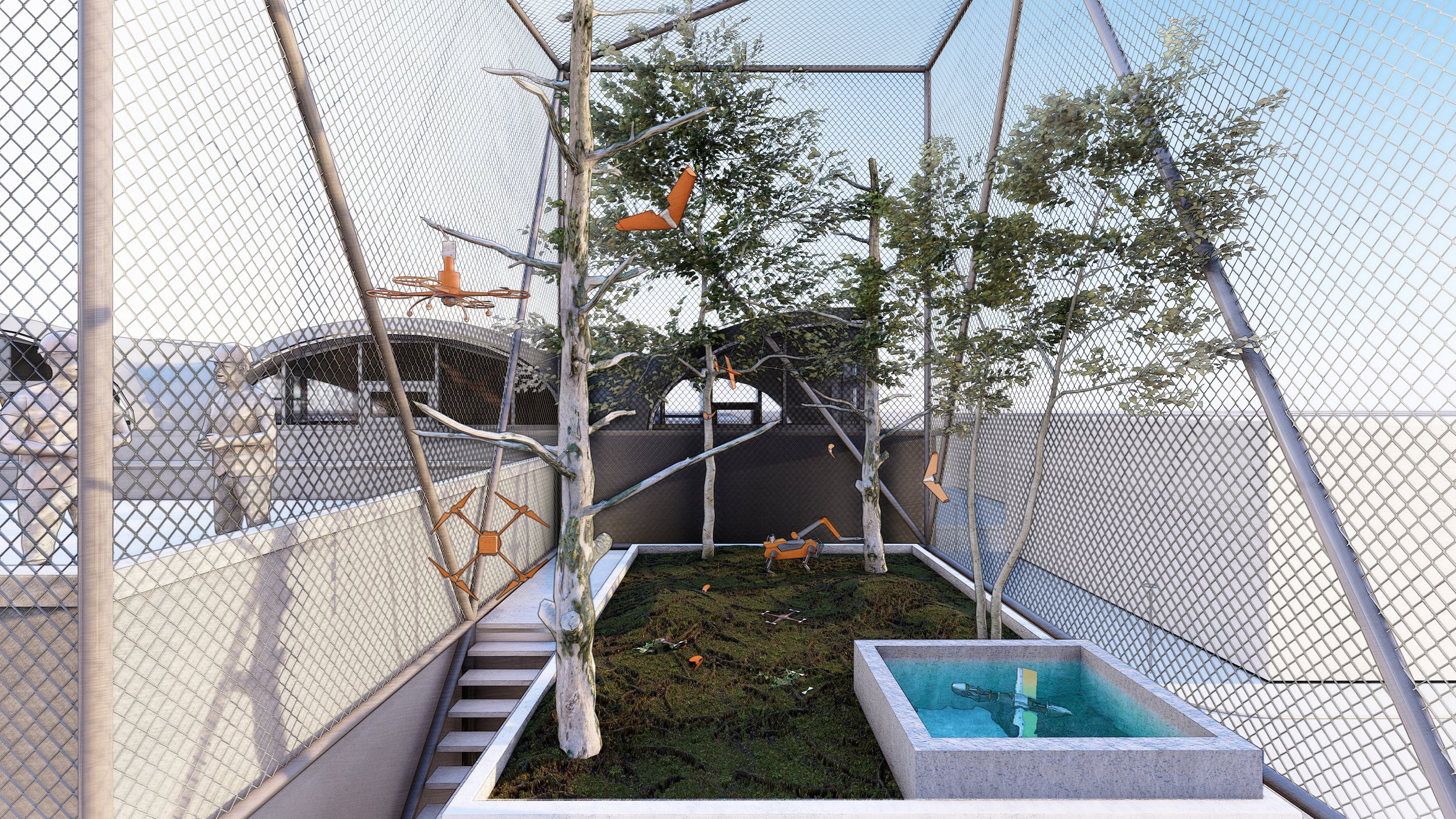
Addressing pressing environmental challenges requires improved sensing and interaction technologies to gather detailed data on sensitive ecosystems. Aerial robots offer automation and agility to enhance the volume and precision of measurements, but operating in remote locations poses higher risks of hardware failures and potential environmental damage. Consequently, developing biodegradable components and sensors is essential to maintain system circularity and reduce harmful residues. The “Biosphere for Robotics” provides a controlled natural ecosystem—complete with soil, plants, and water—to safely test and validate aquatic, arboreal, and biodegradable robot designs.
-
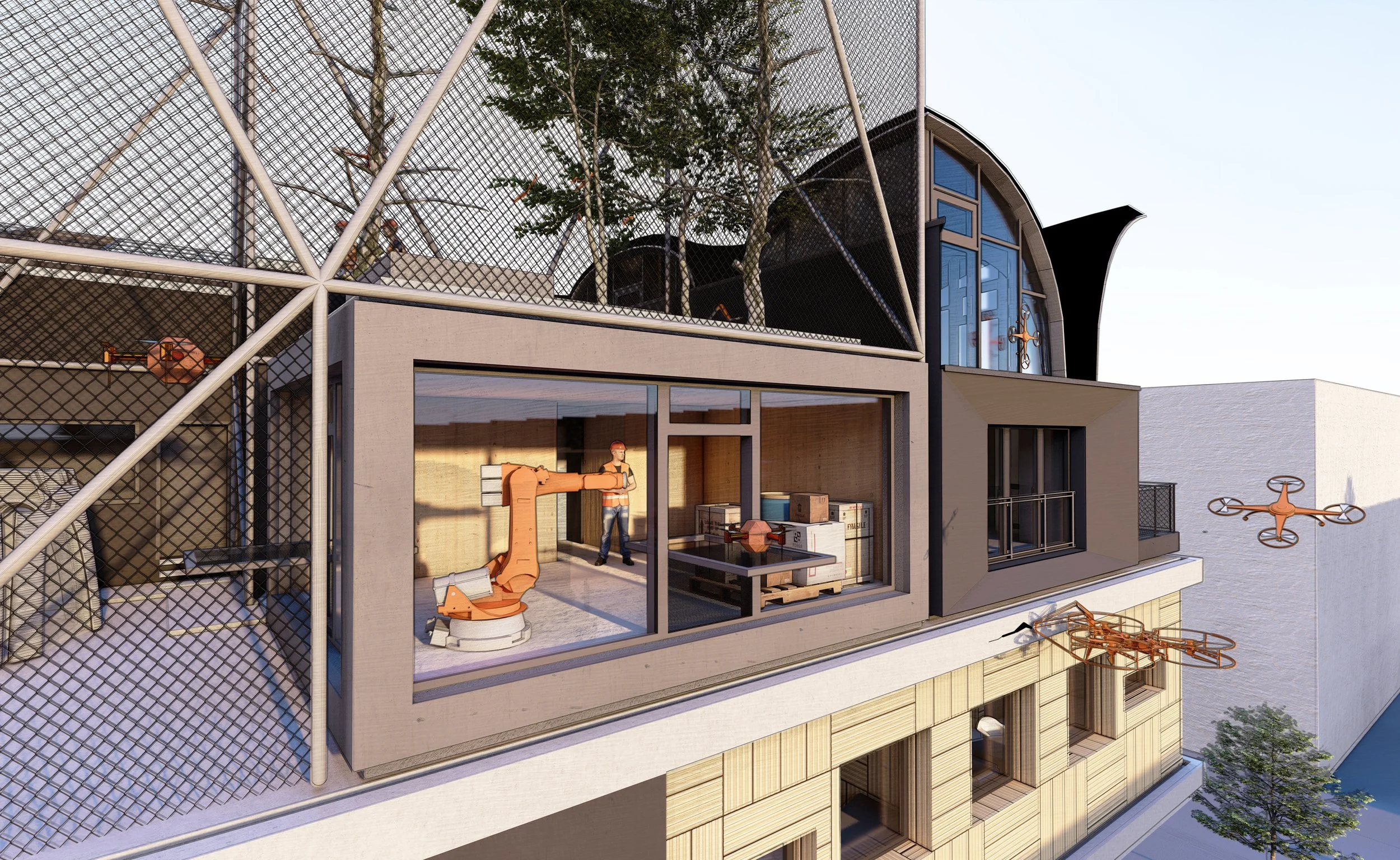
Infrastructure Robotics Interface
Robots are increasingly able to assist humans in an expanding array of tasks, from everyday household chores to complex surgeries and industrial operations. They can also play pivotal roles in emergency responses. However, integrating aerial robots into buildings and human environments presents significant challenges, requiring further investigation into safe and effective coexistence. To address this, DroneHub’s “Infrastructure Robotics Interface” features an interchangeable modular façade that facilitates research into possible integrations, such as wireless charging, delivery platforms, and emergency-response systems. By exploring these interface possibilities and design standards, DroneHub aims to enable a robust and harmonious coexistence between robots and built environments.